Innovation with Integrity

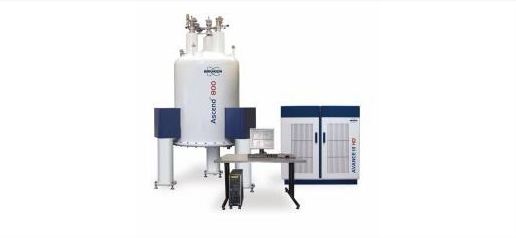
AVANCE III HD with IPSO - General Description
AQS/3 The new Acquisition Control System 3 (AQS/3) chassis has replaced the VME boards, such as CCU, FCU, TCU and GCU with the recently introduced IPSO (Intelligent Pulse Sequence Organizer). The new IPSO compatible SGU/2 is the successor of the former SGU with a much faster and wider digital interface for setting all relevant pulse program parameters, such as frequency, phase and amplitude. A package of frequency, phase and amplitude words, together with some relevant real-time pulses can be set synchronously every 25 ns via the 80 MHz and 48-bit wide LVDS link. The setting via the synchronous and differential LVDS link guarantees an excellent isolation between digital computer electronics and purest RF signals. The new SGU/2 incorporates many more features, such as a pre-viewer for all hardware relevant pulses. So one has not to worry about different hardware required delays. All pre- and post-delayed pulses such as transmitter, preamplifier and receiver gating are generated automatically and must be initialized only once. Therefore, one can fully focus on the NMR sequence and only has to deal with 'ideal' pulses. The new AQS/3 chassis is the consecutive development of the well proven AQS/2 chassis and can now with equipped by the new IPSO AQS Unit. The extended IPSO 19" Unit represents a standalone unit and doesn't fit into the AQS/3 chassis. The AQS IPSO is used with the MicroBay and NanoBay and the extended IPSO 19" Unit with the OneBay and TwoBay. Viewing the AQS/3 chassis from the front, on the left is a proprietary IPSO backplane incorporated. On the right, the extended AQS/3 user bus is able to supply a lot of different AQS functional units (signal generators, receivers, preamplifiers, amplifiers, etc.). The IPSO 19" Unit is a standalone unit that can be placed independently in the console rack. The unit has an internal power supply, supports up to a maximum of 8 channels, contains 2 additional PCI slots, 4 RS232 ports and 2 USB ports.
|
BSMS/2 with ELCB The new BSMS/2 with ELCB units contain
a set of higher integrated boards (ELCB and SCB20) which have replaced
the former controller, lock and shim boards (CPU/3, LCB, all variants
of SCB7/13). These boards provide better performance, higher resolution
and increased stability. The shim boards have been unified - a standard
SCB20 now provides the necessary precision for many variants of
connected shim systems. |
|
Probes General information common to most probes can be found here.
See the appropriate NMR probe documentation for details. |
|
|
HPPR/2 preamplifier module The HPPR/2 amplifies, filters and
routes the NMR response signals from the probe to the RX22 receiver.
It switches the RF transmitter output to the probe. |
|
|
Magnet General handling and maintenance information for all magnets
can be found here. Specific documents are supplied with each magnet. |
|
|
GRASP (optional) The new GREAT for AVANCE III no longer
applies preemphasis to the gradients on its own. Instead, the preemphasis
is digitally computed and applied to the digital gradient data by
an external unit, the DPP (Digital Preemphasis Processor). The preemphasis
is now calculated by a DSP and works on the digital input of the
GREAT. |
|
|
Automation (optional) Bruker Automation allows the user to easily and effectively perform automatic experiments. |
|
|


© 2013 Bruker Corporation